09 September 2012

Recipes X: Water Kefir Recipe

Easy Water Kefir Recipe

Probiotics and Friendly Yeasts for Pennies

1 quart glass mason jar or old glass juice jar
2 tbsp dark brown sugar, light brown sugar, molasses, cane sugar, organic agave nectar (NEVER HONEY)
2 cups spring water or boiled and cooled water (NO TAP Water)
1 pinch baking soda
sliver of lemon or lime with skin removed, medjool date, piece of apple, or some kind of fruit
3 tbsp tibicos/kefir grains
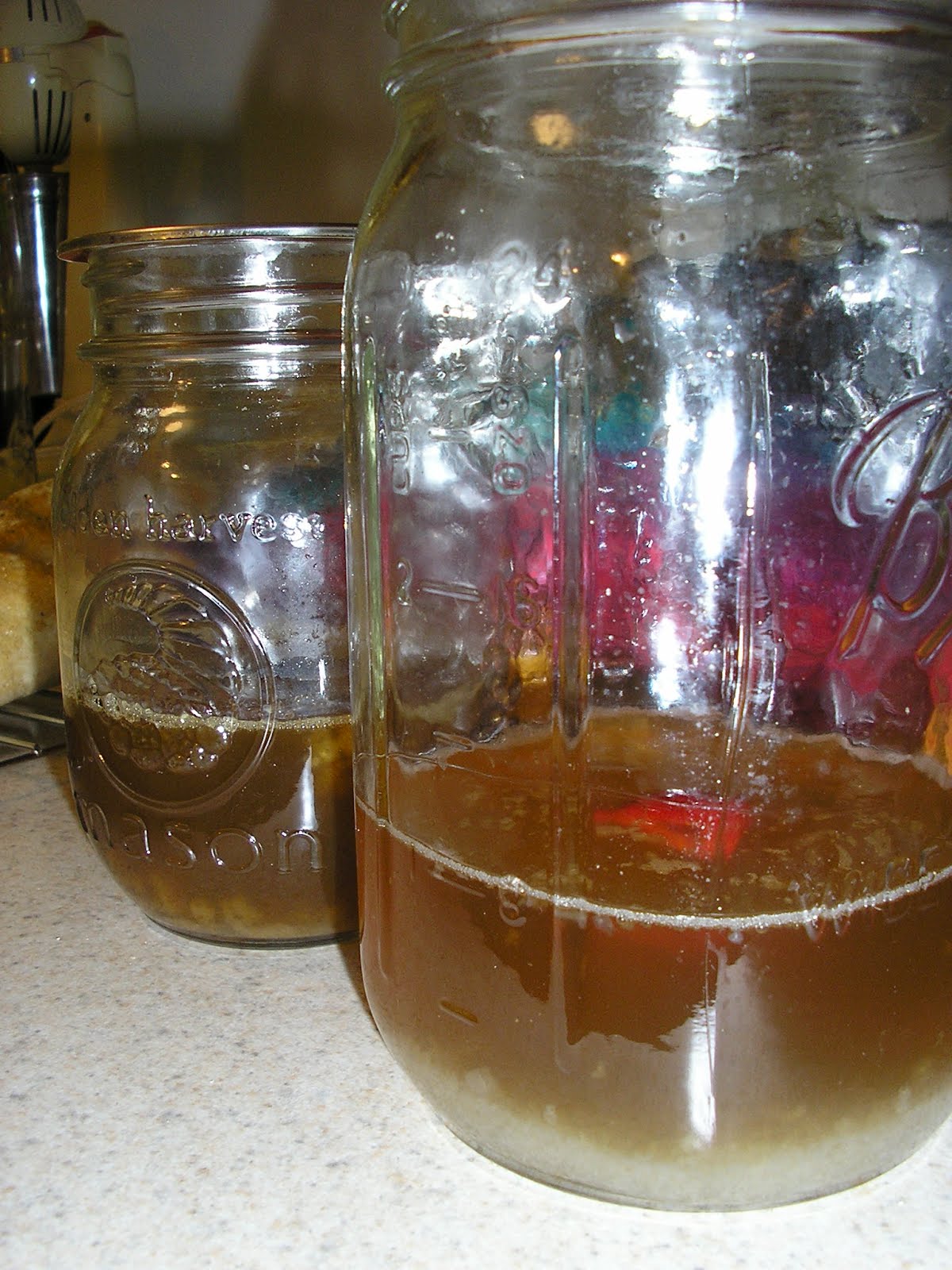
Remember no metal contact with the kefir grains. This harms them. No honey either, as it is antibacterial and anti-fungal  (Honey makes a great sore throat relief). Honey will either significantly harm them or kill them. 
You can use white sugar, however, it doesn't feed the grains like unsulfured bootstrap molasses does. If you brew beer you'll agree that white sugar when fermented leaves a bad bitter apple taste. Undesirable. I prefer light brown sugar in winter time and large granular cane sugar in the summer. 

*Mix water, sugar and baking soda until all dissolved. 
*Pour into jar.
*Add the grains gently.
*Drop in sliver of fruit.
*Cover with cloth and rubber band on (fruit flies love love love to sneak in unless its covered)

Wait 24-36 hours for the sugar to be digested by the grains. Tiny bubbles may form on the surface. Its ok to give it an occasional shake or swishing.  The cloth allows oxygen to enter the brew. Sealing the jar shut  will create bitter kefir wine and deprive the grains of oxygen. The grains need oxygen to survive. 

Strain off the grains for the liquid. I personally enjoy making mine into fruit juice soda. I like to add 1 cup of juice (no high frutose corn syrup) to the 1 cup of water kefir. Then pour into swing top bottle. Let sit on the counter for 1-2 days in a flip top beer bottle or grolsh bottle. This allows the flavors to meld together and secondary fermentation to occur. The secondary fermentation builds the carbonation in the beverage. Then put in the fridge.Careful when opening the lid for the first time. 


You can drink it right after straining the grains but its kind of tangy and boring. I've made some water kefir juice fizzier than your average cola. The flavor possibilities are endless. Take care of your grains and they will grow. The grains are very forgiving which is good if you're like me and forget them for a week. :( If you have too many, I read you can dry them out and make them into powder. This gives you the ability to add to many dishes or pet food or drinks.


The best part about tibicos/bees/water kefir is it produces about 1 trillion probiotics and friendly yeasts within about a day. I was spending about $45/month on probiotic tablets. You can buy the grains on Amazon or look for blogs who are giving them away for free. These grains really do multiply quickly! Essentially they should never die, if you take decent care of them. This stuff really gets your digestive tract moving. I enjoy drinking about 4 oz first thing in the morning. I've even considered spiking it with rum...erg I know bad idea probably, but it tastes so good. 

For more info: http://www.yemoos.com/faqwahealth.html
Bacteria & Yeast species in Water Kefir: http://www.yemoos.com/waterkefirstrains.html


08 September 2012

Plants--the Original Sources of Protein and Amino Acids

By : Dr. John A. McDougall, M.D.

Plants--the Original Sources of Protein and Amino Acids

Proteins are made from chains of 20 different amino acids that connect together in varying sequences—similar to how all the words in a dictionary are made from the same 26 letters. Plants (and microorganisms) can synthesize all of the individual amino acids that are used to build proteins, but animals cannot. There are 8 amino acids that people cannot make and thus, these must be obtained from our diets—they are referred to as “essential.”

After we eat our foods, stomach acids and intestinal enzymes digest the proteins into individual amino acids. These components are then absorbed through the intestinal walls into the bloodstream. After entering the body’s cells, these amino acids are reassembled into proteins. Proteins function as structural materials which build the scaffoldings that maintain cell shapes, enzymes which catalyze biochemical reactions, and hormones which signal messages between cells—to name only a few of their vital roles.

Since plants are made up of structurally sound cells with enzymes and hormones, they are by nature rich sources of proteins. In fact, so rich are plants that they can meet the protein needs of the earth’s largest animals: elephants, hippopotamuses, giraffes, and cows. You would be correct to deduce that the protein needs of relatively small humans can easily be met by plants.

People Require Very Little Protein

The World Health Organization (WHO) recommends that men and women obtain 5% of their calories as protein. This would mean 38 grams of protein for a man burning 3000 calories a day and 29 grams for a woman using 2300 calories a day. This quantity of protein is impossible to avoid when daily calorie needs are met by unrefined starches and vegetables. For example, rice alone would provide 71 grams of highly useable protein and white potatoes would provide 64 grams of protein.

Our greatest time of growth—thus, the time of our greatest need for protein—is during our first 2 years of life—we double in size. At this vigorous developmental stage our ideal food is human milk, which is 5% protein. Compare this need to food choices that should be made as adults—when we are not growing. Rice is 8% protein, corn 11%, oatmeal 15%, and beans 27%. Thus protein deficiency is impossible when calorie needs are met by eating unprocessed starches and vegetables.

The healthy active lives of hundreds of millions of people laboring in Asia, Africa, and Central and South America on diets with less than half the amount of protein eaten by Americans and Europeans prove that the popular understanding of our protein needs is seriously flawed.


http://www.veglov.com/2012/01/plants-original-sources-of-protein-and.html

03 September 2012

Simple ones: Lusciously Divine Whipped Cream

Home-style Whipped Cream
Now without Petroleum!

Easiest recipe ever. You'll never go back to that tub of petroleum rubbish.

1 Pint whole whipping cream
1/3 cup powdered sugar


Pour the whole milk whipping cream into a tall walled bowl. Pour the powdered sugar on top. Turn on the mixer and whip the liquid. Keep mixing until thick like whipped cream. Keeps for 4-5 days in the fridge in a sealed container. Use in any recipe that calls for whipped cream. Delicious by itself, on crepes, in ambrosia; I could go on and on. 

12 August 2012

The Beauty of Water Kefir

Tibicos are a zoogloea cultivated and kept since long-ago. These miraculous mushrooms live in sweetened water with addition of dried fruit and prepare the unusually tasty and curative drink reminding kvass (Russian fermented non-alcoholic refresh drink) from this water.
Zoogloea is a special state of bacterial cells when their capsules become slimy and form gelatinous structures or films. There are a lot of Zoogloea types in nature, however, only three of them are domesticated and studied at most: Tibicos, Kombucha and Tibetan milk mushroom.Though many people think rather skeptically of curative properties of zoogloeas, scientists proved long ago that Tibicos are not only nutritious but also rather useful drink containing vinegar bacteria. They promote digestion and also protect an organism from a various sort of infectious diseases. http://www.ayahuasca-wasi.com/2010/water-kefir/

I always have a hard time explaining what Water Kefir grains really are. People ask me, "are they mushrooms", "are they bacteria" ? Ack. So here is a specific description per the bible of kefir- Yemoos.com

 The grains are a symbiotic relationship of many different strains of beneficial bacteria and yeast which produce lactic acid, carbon dioxide and ethanol when consuming the sugars. The bulk of the grain that you see is a matrix of insoluble polysaccharides (complex sugars), mostly due to the L. casei and L. Brevis in it. It does not produce the stringy kefiran that milk kefir's grains produce, which is a protective mucus that is predominately soluble polysaccharides.

They are these beautiful little gelataneous structures. They bounce too! Its interesting how the grains will take on the hue of the sugar you are using. I recommend giving them a shot. Its such a cheap alternative to standard probiotic tablets. You can buy them Amazon or independent blogs. Sometimes they're giving them away for free! 


For a recipe see entry: http://lushforest.blogspot.com/2012/09/recipes-string-of-pearls-x.html

21 July 2012

Recipes IX: Tofu-Cheeseless-Cake

Tofu -Cheeseless- Cake

This is a nice easy alternative to calorie loaded conventional cheesecake.

2 (12 ounce) packages extra firm tofu, drained
1 cup white sugar
1/4 cup olive oil

2 teaspoon vanilla extract
1.5 cups of chopped blueberries (fresh)
2 cups powdered graham crackers (pulsed in food processor)
2 pats of butter
.5 cup of powdered walnuts (pulsed in food processor)
.5 cup of stevia

Preheat oven to 350 degrees. Drain tofu and press for 1 hour to get excess water out.

In a medium bowl mix together the crumbed graham crackers, crushed walnuts, stevia and melted butter. Stir together well. Pour into cheesecake spring pan. Press crust in pan and then bake for 350 degrees for 7-9 minutes.

Depending on how awesome your blender is, determines this step. If you've an awesome blender put the 2 packages of tofu, sugar, vanilla, olive oil in the blender and mix until its custard consistency. If you've a crappy, piece of shit blender like I have, It helps to mix the ingredients in a bowl and in small amount at a time, pour into the blender or use an immersion blender.

The tofu custard mix is uniform and smooth. Chop/pulse fresh blueberries. Stir into the mixture but not too hard. Pour mix into the spring pan. Smooth off the top. Slide in the oven. Bake for 25 minutes at 350 degrees. Take out let cool, refrigerate. Enjoy.


(How about that nice rotten banana in the back? ew)


09 July 2012

Who's Pyramid is Properly Built?


Below are some different food pyramids I've been inspecting. 


The Vegan Pyramid


The Vegetarian Pyramid


The Standard American Pyramid


The Canadian Pyramid


The Mediterranean Pyramid


04 July 2012

Simple Ones: Ginger Sesame Vinaigrette

Ginger Sesame Vinaigrette

3 tsp grated ginger root
1/3 cup Rice Vinegar
3 tbsp Toasted Sesame Seed Oil
2 tsp Honey (preferable raw honey)
Sprinkle Sesame seeds
1 cup Organic canola or organic neutral oil
3 tbsp Good quality soy sauce (ie: not food store brand)

Combine in bowl. Add canola/neutral oil last. Store in glass bottle. Shake before you.

Good on lettuce or seaweed salads or as a marinade.

(This recipe can be tailored to taste. Especially since rice vinegar has a strong taste.)

18 May 2012

Simple Ones: Refreshing Lemonade

Refreshing Lemonade

Without rotting your teeth

Naturally lemony, naturally beautiful


2 Ball Quart Jars or pitcher
3 lemons (scrubbed and washed with natural soap)
Stevia or Agave Nectar to taste
Filtered water


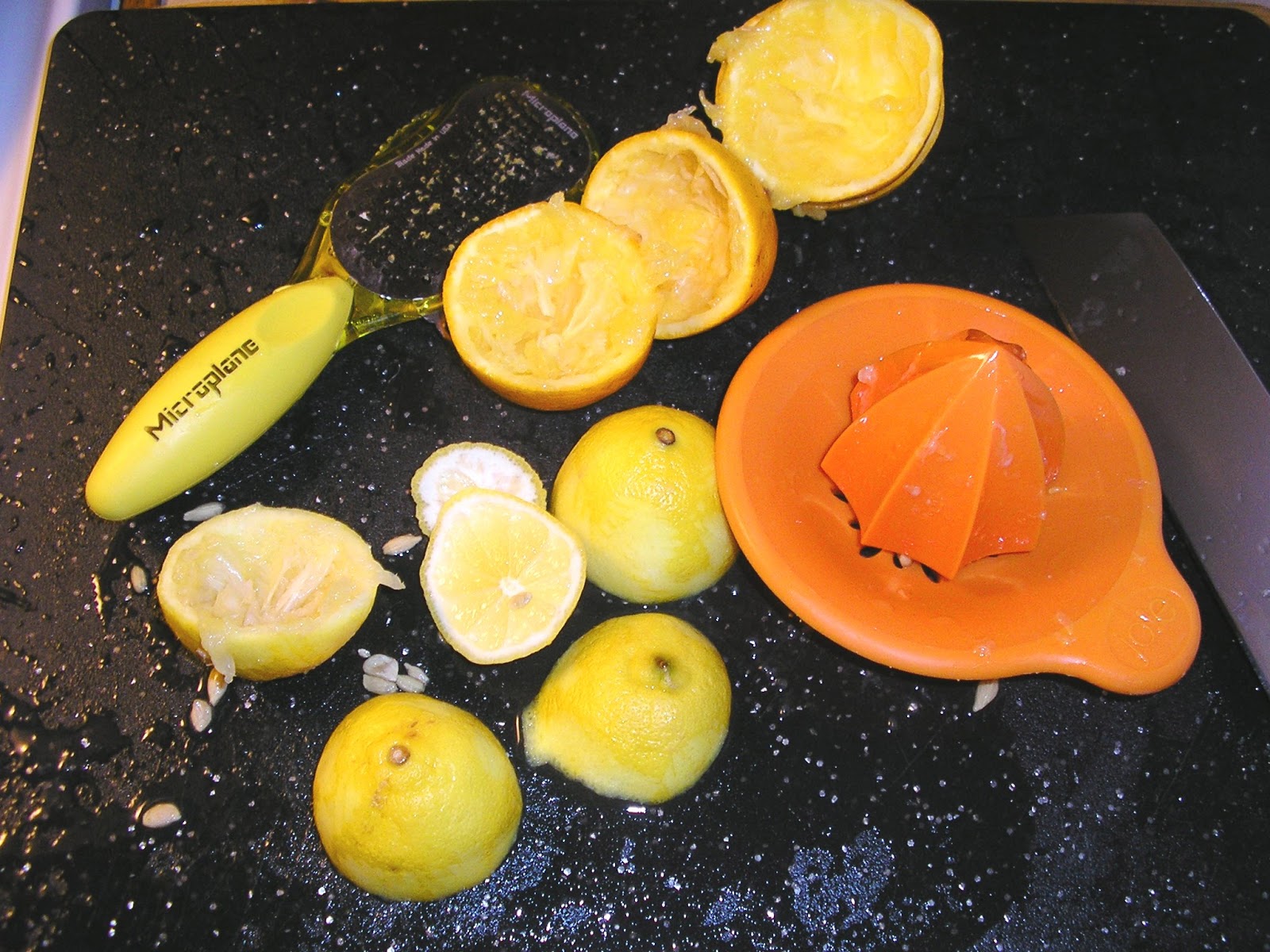
Cut 1 lemon into lemon discs like cucumber slices. Drop a few into the jars. The second lemon, cut in half. Juice both halves, 1/jar. The 3rd lemon, using a micro-plane or zester, zest the outside of the lemon into the jars. You can also use the 3rd lemon to juice the jars. Fill the jars with filtered water. I used 3.5 tablespoons of stevia or Agave Necatr but you can use more or less. Screw the lids on and shake.

Its really a light, summery, thirst quenching drink. It also makes a nice gift in the jar. Overnight it will take on a nice lemony hue.


15 May 2012

Recipes: Whys & Whats

Ingredients... What's in it?


Why do I always say use olive oil, himalayan salt, etc??


What you invest in your health will determine how you feel tomorrow, next month, 2 decades from now. Olive oil is far better for yourself than canola which comes from soybean. Over 90% of soybean in America is genetically tampered with. I mean they added a bacteria (e.coli), an animal gene and a healthy dose of antibiotics, and assorted chemicals. You really want to eat that? I don't do my food shopping at the pharma. 


Make sure, if you can, to check for this :


This ensures your food hasn't been tampered with genetically. Or if you want to really roll out right:


This ensures people received a fair wage and it wasn't genetically tampered, the animals were humanely treated, no chemicals, pesticides, herbicides were used. It means its the closest to homegrown safe you can get. 

If you can't do the organic deal on your dairy, at least check for this label:


This ensures the cows were not treated with bovine growth hormones. As a result, less puss in your milk, slightly healthier cows, less collaboration for creating a super virus/bacteria. 

Avoid things like: fortified, bleached, artificial flavors, colorants, low fat/no fat, hydrogenated, high fructose corn syrup, preservatives (if possible), bromate. 


Treat your body nice and it will reward you with many years of health. The rise of diabetes and cancers is astounding. One can only assume its the amount of chemicals in our food and world. Other than sex, what do you actually put inside your body?  Eating is such an intimate activity.  Its your food, and you have a right to know what you're consuming. 


Recipes VIII: Creamy Vegetable Orzo

Creamy Orzo with Asparagus & Tomato

A New Twist on a Old Favorite

1 cup orzo
2 splashes olive oil
1.5 tsp of crushed garlic
1.5 cups of chicken broth/ bullion or veg'n alternative
1 packet of Knorr Alfredo (i know, i know something processed)
1 cup of heavy whipping cream- or - 1.5 cups milk
Bunch of asparagus
1 tomato or 2 romas
1 tsp parsley
1 tsp sea salt or Himalayan salt
Several spins on the pepper grinder
2 dashes of garlic powder

In a deep pan heat up the oil on my favorite stove number, 4, with the garlic in it. Start a pot of the asparagus in the bullion liquid. When the garlic starts sizzlin' dump in the orzo. Stir around so it browns a little and absorbs the delicious garlic oil.

Then scoop some of the chicken bullion liquid off and pour into the pan with orzo. It will hiss and belch a great big sizzle steam cloud. That means you're doing it right. Keep slowly adding the chicken liquid to it. Stirring around.

While this is absorbing liquid, start the pot of alfredo. Heat the milk/cream and powder. Make sure to stir well because these sauces have the tendency to burn quickly to the bottom of the pot. You really need a third arm at this point.

Pour in the asparagus and chicken liquid. The orzo will keep cooking. If at any point the pan looks too liquidy, spoon off the liquid. When it has reduced down to your liking, pour the alfredo over the orzo & asparagus.Add the listed spices. Stir around well. Taste, if you want more salt or more pepper or spices-now's your chance. Reduce heat. Add the diced tomato. Stir gently, the tomato will become softer. At this point remove from heat and pour into a serving dish. Now pour yourself a nice beverage-you deserve it.